When exporting magnesium oxide boards (MgO boards), one of the most common and practical questions buyers ask is:
How many boards can actually fit into one container?
At first glance, this may seem like a simple calculation. Many people assume that by dividing the container volume by the size of a single board, they can get an accurate number. However, in real-world logistics, this method is rarely reliable.
Container loading is not just about volume—it involves multiple factors such as pallet design, loading methods, weight limits, and handling requirements. Understanding these factors can help you avoid costly mistakes and plan your shipments more efficiently.
Why Volume Calculation Does Not Work
The most common mistake is relying purely on theoretical volume.
For example, a standard MgO board size is 1220 × 2440 mm, while the internal width of a container is about 2350 mm. This means boards cannot fit perfectly side by side, leaving unused gaps.
These small gaps may seem insignificant, but across an entire container, they can significantly reduce the total loading quantity.
In addition, containers are not perfectly rectangular usable spaces. Structural elements, door frames, and handling limitations all affect how cargo can actually be arranged.
Key Factors That Affect Loading Quantity
1. Container Type and Dimensions
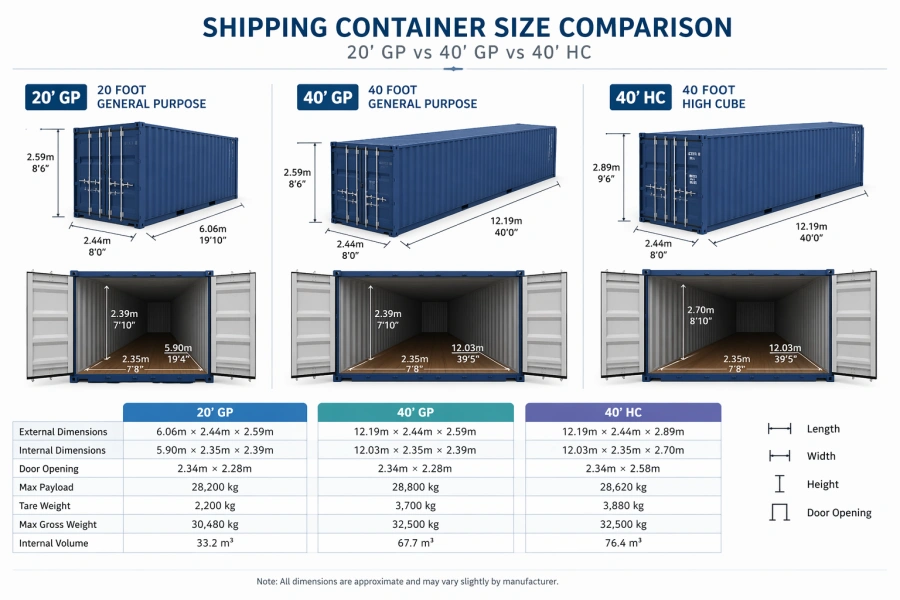
The three most commonly used container types are:
- 20′ GP (General Purpose)
- 40′ GP (General Purpose)
- 40′ HC (High Cube)
While a 40′ container has roughly double the volume of a 20′, the loading quantity does not always double. This is because:
- Weight limits may be reached first
- Pallet arrangements may not scale perfectly
High Cube containers offer extra height, which can help when stacking pallets, but the benefit depends on pallet design.
2. Pallet Packaging
In most cases, MgO boards are packed on pallets for easier handling and protection.
However, pallets introduce additional constraints:
- Pallets take up extra space
- Pallet height reduces usable vertical space
- Forklift access must be considered
This means you cannot simply calculate based on individual boards—you must consider the pallet as a complete unit.
3. Loading Methods
Loading strategy plays a major role in determining final capacity.
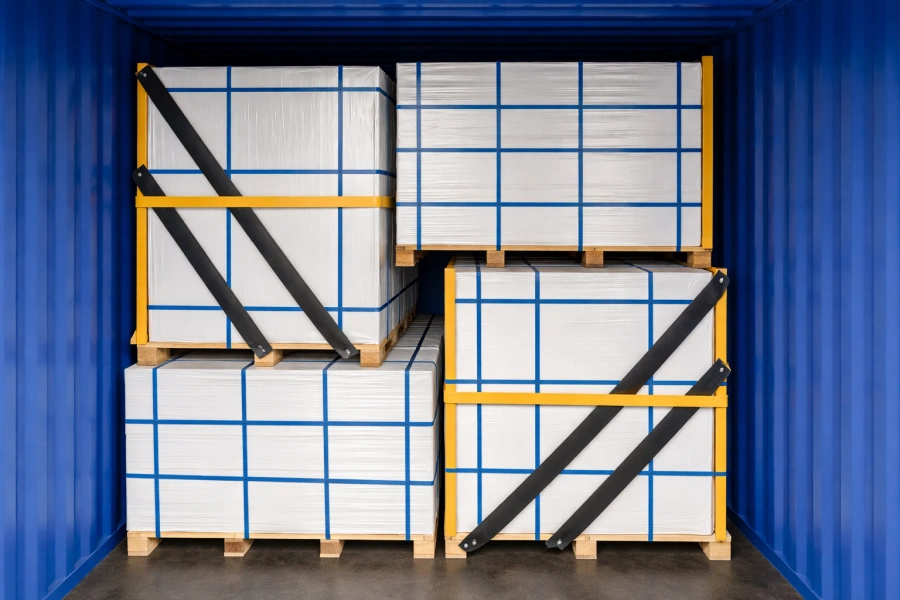
There are two common pallet orientations:
- Horizontal placement (flat on the floor)
- Vertical placement (pallet turned upright)
To improve space utilization, many suppliers use a mixed loading method, alternating horizontal and vertical pallets.
This approach helps reduce empty space inside the container and can significantly increase loading efficiency compared to using only one orientation.
4. Container Door Limitations
One critical factor that is often overlooked is the container door size.
Even if a pallet arrangement looks feasible on paper, it must still pass through the container door.
Typical door dimensions:
- Width: about 2.34 meters
- Height: about 2.28 meters
If pallets exceed these limits, they simply cannot be loaded as planned.
5. Weight Limits (Often the Real Constraint)
For MgO boards, especially high-density flooring boards, weight is often the limiting factor, not space.
Typical densities:
- Wall boards: around 1000 kg/m³
- Flooring boards: around 1300 kg/m³
This means:
👉 The same container may hold fewer flooring boards than wall boards
Additionally, different countries and ports may have their own weight restrictions, which can further limit loading capacity.
A Practical Reference Example
To give you a general idea, here are some typical loading quantities for standard boards (1220 × 2440 mm):
Wall / Ceiling Boards (20′ GP)
- 6mm: around 1100 pcs
- 8mm: around 800+ pcs
- 12mm: around 500+ pcs
Flooring Boards (20′ GP)
- 18mm: around 300 pcs
- 20mm: around 280 pcs
These numbers are not fixed but provide a practical reference based on common industry practices.
Why Different Suppliers Give Different Answers
If you’ve asked multiple suppliers, you’ve probably noticed that the numbers vary.
This is completely normal and usually depends on:
- Pallet design differences
- Loading strategy
- Safety margins
- Handling preferences
Some suppliers prioritize maximum quantity, while others focus on safer and more stable loading.
A slightly lower loading number may actually reduce the risk of damage and improve overall logistics efficiency.
How to Plan Your Orders More Effectively
To avoid problems during shipping, it is important to:
- Confirm container type in advance
- Check weight limits for your destination
- Understand pallet dimensions and height
- Discuss loading methods with your supplier
By doing so, you can prevent issues such as:
- Overweight containers
- Inefficient space usage
- Unexpected shipping costs
👉 Need a Detailed Loading Breakdown?
This article provides a simplified overview to help you understand the key concepts.
For a complete and detailed guide—including container specifications, pallet design, loading strategies, and full data tables—please visit:
👉 https://magnesium-oxide-board.com/mgo-board-container-loading/
Understanding container loading is not just about maximizing quantity—it is about finding the right balance between safety, efficiency, and cost.
With the right approach, you can optimize your shipments and avoid unnecessary risks in international trade.
If you need further assistance with MgO board container loading, feel free to contact us at info@suparnar.com or click the button below to get in touch. We will get back to you within 24 working hours.